

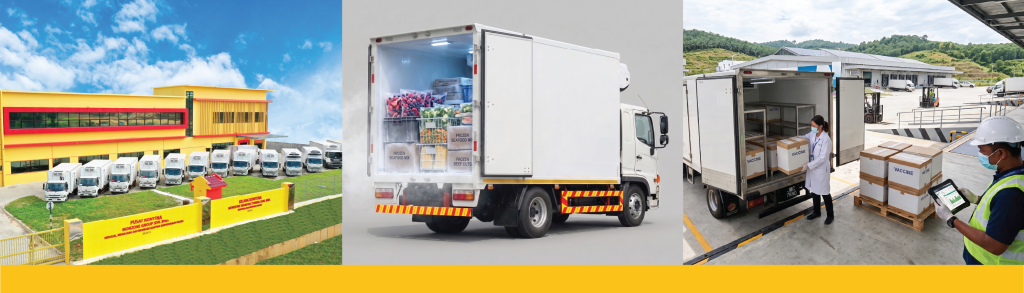
The Importance of Insulated Containers in Cold Chain Logistics
Maintaining the correct temperature for perishable and temperature-sensitive cargo from the warehouse to the destination is one of the most critical challenges in modern logistics. A single temperature-control failure can result in significant product loss, from spoiled frozen seafood and fresh produce to compromised vaccines and pharmaceutical products.
This is why insulated containers are an essential part of the cold chain, not simply an accessory to the refrigeration system. By minimising heat transfer from the external environment and helping retain the desired cargo temperature, a properly designed insulated container works together with refrigeration system to provide consistent and reliable temperature protection throughout the delivery journey.
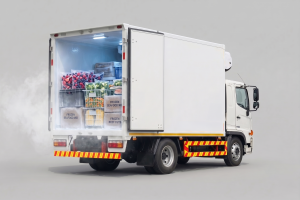
For businesses operating temperature-controlled transport, investing in a high-quality insulated container is fundamental to protecting product integrity, reducing spoilage, and maintaining a reliable cold chain.
How an Insulated Container Works
An insulated container creates a thermal barrier between the cargo compartment and the external environment, helping minimise heat transfer and maintain a stable internal temperature. The insulation core, typically made form extruded polystyrene (XPS) or polyurethane (PU), is sandwiched between inner and outer fibre-reinforced plastic (FRP) skins. This sandwich-panel construction provides effective thermal insulation across the walls, floor, and roof, reducing the heat load on the refrigeration system and allowing it to operate more efficiently.
One of the key challenges in insulated container design is thermal bridging, areas around structural joints, frames, doors, and other connection points where heat can transfer more easily through the body. High-quality construction methods address these potential weak points through properly designed thermal insulation strips, sealed joints, and one-piece panel construction. By reducing seams, joints, and potential thermal bridges, the container can provide more consistent thermal performance and help maintain the required cargo temperature over extended journeys.
In a well-designed refrigerated vehicle, the refrigeration system creates the cooling, while the insulated container works continuously to retain it. Together, they form the foundation of efficient and reliable cold chain.
Key Specifications to Consider When Choosing an Insulated Container
Not all insulated containers deliver the same level of thermal performance, and the difference often comes down to the insulation material, construction quality, and attention to detail. When selecting a refrigerated truck body, several key specifications should be considered:
- Thermal Conductivity: PU typically offers lower thermal conductivity, around 20.3 mW/m·K, compared with approximately 29 mW/m·K for XPS. The lower the thermal conductivity, the better the material’s ability resist heat transfer, allowing PU to provide stronger insulation performance for a given panel thickness.
- Panel Density: Commercial-grade insulation cores are commonly around 40kg/m, providing a practical balance between insulation performance, structural strength, and overall vehicle weight.
- Water Absorption & Dimensional Stability: Low water absorption helps protect the insulation core from moisture-related deterioration, while good dimensional stability helps maintain the panel’s thermal and structural performance over many years of operation.
- Door & Floor Construction: Properly engineered floors and well-sealed door frames are essential to maintaining the thermal integrity of the container. These areas should be designed to minimise heat transfer and potential thermal bridges.
Beyond the insulation panels themselves, features such as movable partitions, manual flip dividers, and bulkheads can provide additional operational flexibility by allowing a single refrigerated vehicle to handle different temperature zones. This is particularly valuable for operators transporting mixed chilled and frozen loads on the same delivery route, helping maximise vehicle utilisation and improve overall fleet efficiency.

What Sets a High-Quality Build Apart
A well-engineered insulated container must deliver a combination of thermal performance, structural durability, hygiene, and long-term operational efficiency. Superior insulation performance starts with a high-density, properly cured core material that is consistently manufactured without gaps, voids, or weak points. At the same time, the structure must remain lightweight, as excessive weight can reduce available payload capacity and increase vehicle operating costs.
Hygiene and ease of maintenance are equally important, particularly for the transportation of food, pharmaceuticals, and other temperature-sensitive products where contamination control is critical. Smooth, hygienic interior surfaces, together with features such as antibacterial PVC curtains or wall panels, can help maintain a cleaner and more controlled cargo environment.
True insulation performance should also be measured by the container’s ability to maintain the required temperature consistently over time, not simply its initial temperature when the doors are closed. This long-term temperature retention is a key differentiator between a container engineered for demanding daily commercial operations and one that performs only under ideal conditions.
As insulated containers represent a significant capital investment, their long-term value extends beyond the initial purchase price. Resistance to corrosion, moisture, impact, and general wear, combined with efficient thermal performance and ease of maintenance, plays an important role in determining the container’s total cost of ownership and its ability to deliver reliable service over five, ten, or more years.
Why It Matters for Food, Pharma, and Frozen Cargo
For food distributors, a reliable, insulated container plays a critical role in protecting product quality, reducing temperature-related rejections, and minimising losses caused by temperature excursions. For pharmaceutical transport, where compliance with Good Distribution Practice (GDP) requirements is essential, consistent and controlled temperature management is not simply an operational advantage, it is a fundamental requirement for maintaining product integrity, regulatory compliance, and business continuity.
For frozen goods distribution, high-performance insulated containers are particularly valuable in maintaining stable sub-zero temperatures over extended periods. This becomes even more important on multi-stop delivery routes, where frequent door openings can introduce warm air and place additional thermal load on the refrigeration system. A well-designed container helps minimise temperature fluctuations and supports consistent product protection throughout the entire delivery cycle.
Why Monzone Is a Trusted Brand in the South-East Asia Region
With close to three decades of experience in the cold-chain industry, Monzone manufactures refrigerated truck insulated bodies and insulated containers for trailers to customers across Malaysia, Singapore, Thailand, and the Philippines. The company maintains ISO 9001:2015 and ISO 45001:2018 certifications, while its PVC strip curtains and FRP panels have undergone antibacterial activity testing. These capabilities are particularly relevant to food and pharmaceutical distribution, where stringent hygiene and product-handling requirements are essential.
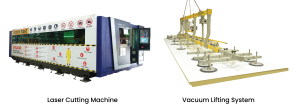
Monzone’s manufacturing operations are carried out in-house and supported by CNC panel-cutting, laser-cutting, and vacuum-lifting systems. These technologies enable accurate fabrication, consistent assembly, and repeatable quality across different projects and configurations.
The company’s project experience includes customised solutions for government healthcare agencies, airport ground-handling operations, and mobile medical clinics, applications that require close attention to technical specifications, dimensional accuracy, and compliance with customer requirements.
As an official distributor of Thermo King refrigeration systems, Monzone also provides fully electric refrigerated truck solutions and sustainability-focused insulated container designs. By combining in-house manufacturing capabilities with advanced refrigeration technology, the company continues to develop cold-chain solutions designed to support evolving operational, environmental, and regulatory requirements.
Choosing the Right Container for the Long Haul
Cold-chain transportation is only as reliable as its weakest link, and the insulated container is one of the most critical, and physically demanding, components of the entire system. Investing in a properly engineered unit, built with the right insulation core, robust sealed construction, and hygienic interior finishes, can deliver significant long-term benefits, including reduced product losses, lower maintenance requirements, and more consistent compliance with applicable industry standards.
For fleet operators across Malaysia and Southeast Asia, the value of an insulated container extends well beyond its initial purchase price. Long-term reliability, thermal performance, durability, hygiene, and proven build quality all contribute to a lower total cost of ownership. Ultimately, choosing the right container is not simply about acquiring equipment, it is about making an investment that protects cargo, supports operational efficiency, and delivers dependable performance throughout its service life.