


A refrigerated delivery truck departs from a cold storage facility at midday. By its third delivery stop, the vehicle roof has been exposed to hours of intense sunlight, the road surface continues to radiate heat, and a sudden afternoon downpour has added to the already challenging tropical conditions.
For cold-chain transportation operators in Malaysia, this is not an unusual scenario, it is part of everyday operations. These demanding environmental conditions make the quality and performance of an insulated container a critical factor in maintaining cargo integrity and temperature stability throughout the delivery journey.
This article explores the key differences between a high-quality insulated container and a basic insulated body, highlighting the essential features and considerations that Malaysia fleet operators should look for when transporting food, beverages, pharmaceuticals and other temperature-sensitive products.
At Monzone Group, we approach cold-chain transportation from the manufacturing perspective. As a specialised manufacturer of customised insulated refrigerated vehicle bodies in Malaysia, we design and build solutions specifically suited to tropical operating environments. Our focus is on effective thermal insulation, structural durability, reliable temperature performance and practical operational requirements, helping businesses maintain product quality and protect their cold-chain integrity from collection to final delivery.
Why Malaysia’s Climate Is Challenging in Temperature-Sensitive Cargo
Malaysia’s tropical climate presents year-round challenges for refrigerated transportation, with consistently high temperatures, elevated humidity, intense sunlight and frequent heavy rainfall. High ambient temperatures increase the heat load on insulated vehicle bodies, while prolonged exposure to direct sunlight can cause roof and wall surface temperatures to rise significantly above the surrounding air temperature.
High humidity also increases the risk of moisture condensation on cold surfaces, while frequent rainfall, vehicle washing and exposure to water put the quality of seals, joints and external finishing to the test.
Furthermore, refrigerated vehicles often experience significant changes in operating conditions throughout a single delivery journey, from leaving an air-conditioned cold storage facility to entering an open loading bay, followed by extended periods in slow-moving traffic under the tropical heat.
An insulated container designed for milder climates may not necessarily deliver the same level of thermal performance under these demanding conditions. Over extended journeys and multiple delivery stops, even relatively small temperature fluctuations can accumulate, potentially compromising the quality, freshness and integrity of temperature-sensitive cargo.
This is why Malaysia operators should place particular emphasis on insulation quality, airtight construction, moisture resistance and overall thermal performance when selecting an insulated refrigerated vehicle body.

Thermal Insulation Performance in an Insulated Container
Insulation is the foundation of an effective refrigerated vehicle body. Its primary function is to minimise heat transfer from the hot external environment into the cargo compartment, helping maintain a stable internal temperature throughout transportation.
A quality insulated container should incorporate suitable insulation materials across all critical sections, including the side walls, roof, floor, front panel and rear doors. The insulation should be evenly distributed, properly bonded and securely sealed to minimise gaps, weak points and potential heat leakage.
Well-designed insulated panels help reduce heat gain from prolonged exposure to direct sunlight and high ambient temperatures. This allows the cargo compartment to maintain more consistent temperatures while reducing the refrigeration system’s cooling workload, energy consumption and operating strain.
However, insulation thickness alone does not determine overall performance. Factors such as thermal conductivity, material density, panel construction, bonding quality and installation workmanship all contribute to the effectiveness of the insulated body.
Particular attention should also be given to thermal bridges, areas where heat can travel more easily through structural components such as metal frames, brackets, fasteners and poorly constructed panel joints. These areas can become potential weak points in an otherwise well-insulated container.
When evaluating an insulated refrigerated vehicle, operators should ask suppliers to clearly specify the insulation material, thermal conductivity (-value), panel thickness and construction method. Where available, independent thermal performance test results can provide further assurance of the insulation’s effectiveness.
At Monzone Group, we recognise that effective insulation is not simply about using thicker panels. It is about combining suitable insulation materials, consistent panel construction, proper bonding, effective sealing and precision manufacturing to achieve reliable thermal performance under demanding tropical operating conditions.
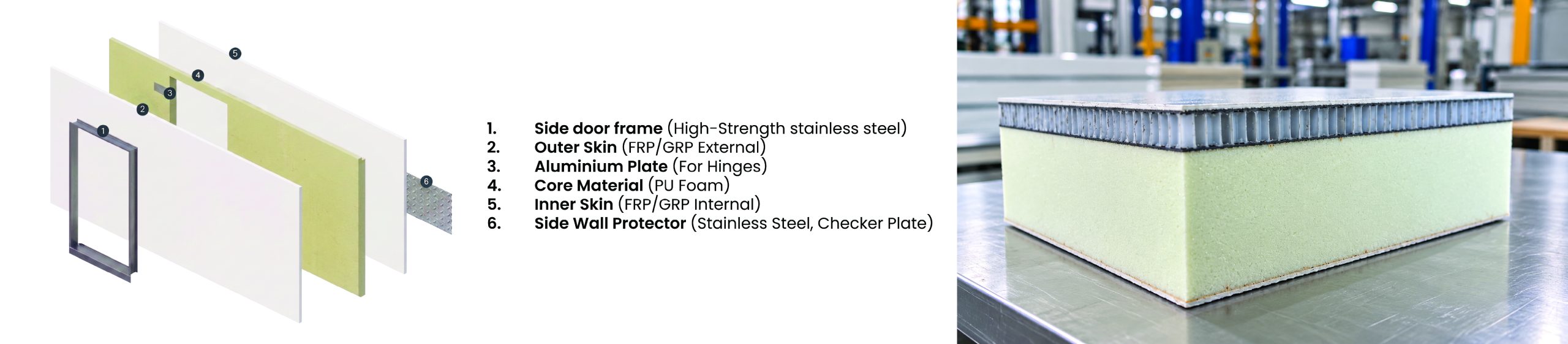
Structural Durability and Weather-Resistant Construction
In Malaysia, refrigerated containers and truck bodies are frequently exposed to demanding operating conditions, including repeated loading and unloading, outdoor parking and prolonged exposure to tropical weather. Therefore, structural strength and weather resistance are essential considerations when selecting an insulated refrigerated vehicle body.
Look for robust structural components, durable exterior finishes and materials that offer good resistance to corrosion, ultraviolet (UV) exposure and repeated contact with rain and moisture. These features help protect the insulated body against premature deterioration and maintain its structural integrity throughout years of operation.
Particular attention should be given to panel joints, corner connections, door frames and external sealing. These areas must be properly assembled, securely bonded and effectively sealed to prevent water penetration. Moisture entering the insulated panels can potentially damage the insulation structure, reduce thermal performance and result in costly repairs.
The floor and door sections also deserve special consideration because they experience the highest levels of daily operational wear. Frequent forklift movements, trolley handling, heavy cargo loading and repeated door operation can place considerable stress on these areas.
A well-manufactured insulated body should therefore incorporate durable flooring, reinforced structural sections, reliable door hardware and effective protective finishes to withstand continuous commercial use.
At Monzone Group, we believe that a quality refrigerated vehicle body must deliver more than good insulation performance. It must also withstand the physical demands of daily operations and the challenging tropical environment, providing fleet operators with long-term durability, reliability and confidence.
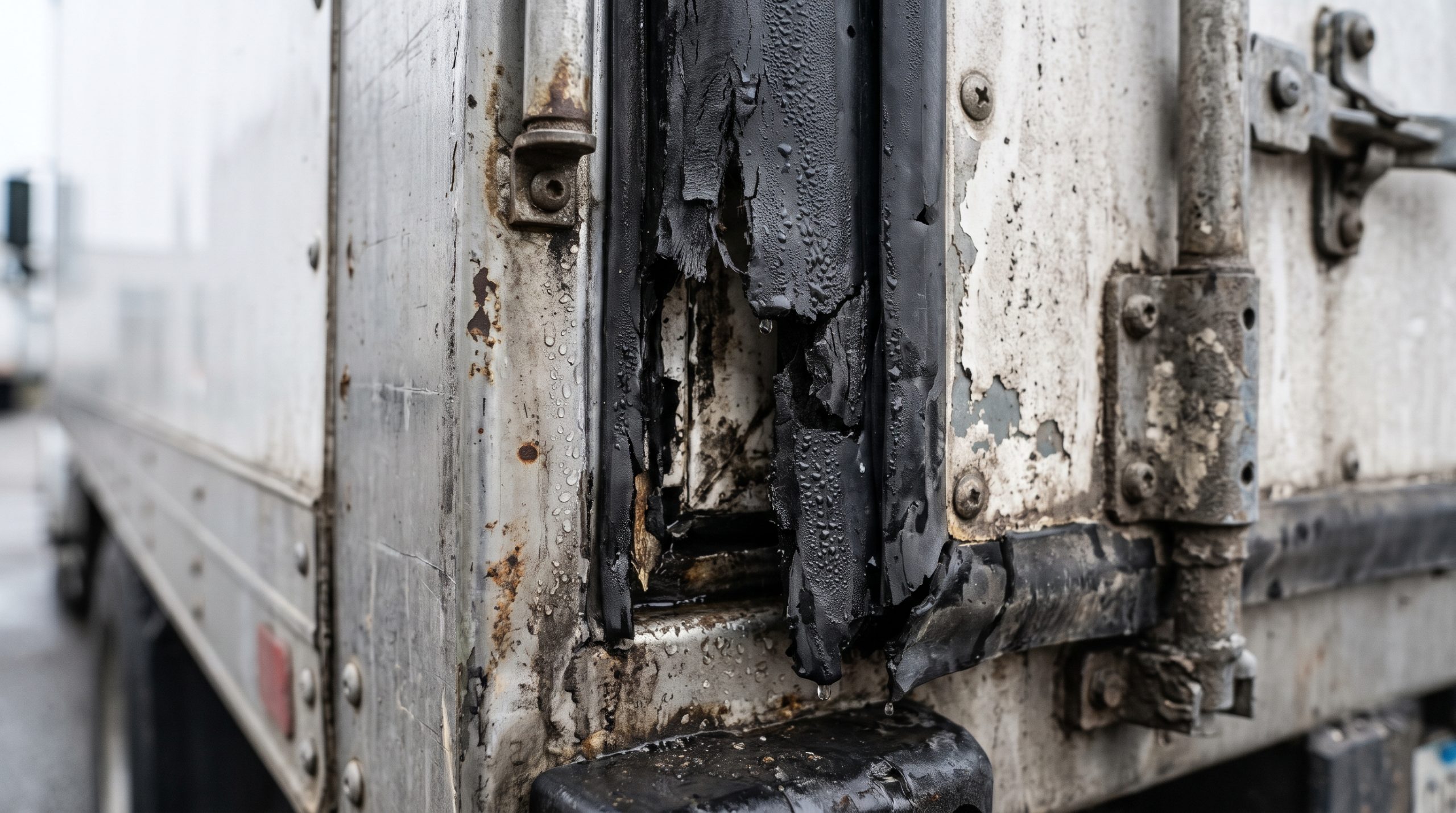
Airtight Construction, Moisture Control and Effective Door Sealing
Even the best-insulated walls cannot deliver their full thermal performance if warm, humid outside air continuously enters the cargo compartment. Effective insulation must therefore be supported by proper airtight construction and reliable sealing throughout the insulated body.
Every time external air enters the cargo space, whether through worn door gaskets, poorly sealed panel joints, structural gaps or doors left open during loading and unloading, it introduces additional heat and moisture. This increases the thermal load inside the compartment and requires the refrigeration system to work harder to restore the required temperature.
Continuous air infiltration can also cause greater temperature fluctuations, increase refrigeration operating time and encourage moisture condensation on cold internal surfaces, potentially affecting cargo packaging and product quality.
These challenges are particularly significant in Malaysia, where warm and humid ambient conditions prevail throughout the year. Controlling unwanted air infiltration is therefore just as important as selecting the right insulation material and panel thickness.
When evaluating an insulated refrigerated vehicle body, operators should pay close attention to:
- Door gaskets and seals: Ensure they provide consistent contact pressure and an effective airtight seal around the entire door opening.
- Panel joints: Check that all joints are properly bonded, finished and sealed to prevent air and moisture penetration.
- Door frames and corners: Ensure this critical connection points are properly constructed and sealed.
- Door alignment and locking mechanisms: Ensure doors close securely and maintain consistent sealing pressure.
- Operational practices: Minimise unnecessary door-opening time and consider suitable strip curtains or compartment management solutions where appropriate.
At Monzone Group, we recognise that thermal insulation and airtight construction must work together. Our approach focuses on proper panel assembly, accurate fitting, reliable sealing and practical door design to minimise unwanted heat and moisture infiltration, helping refrigerated vehicles maintain more stable internal temperatures under demanding tropical operating conditions.
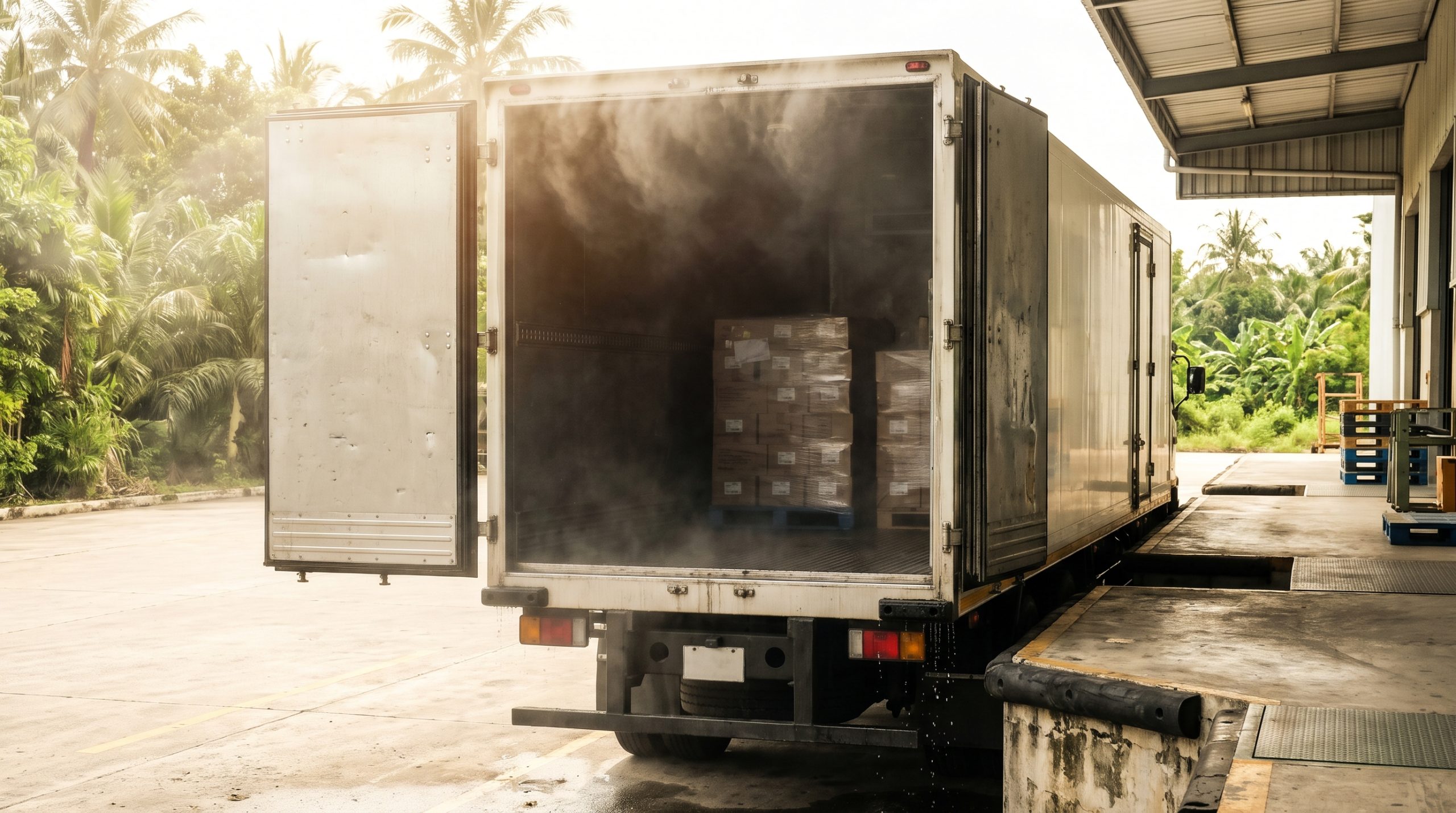
Doors Sealing and Air Leakage Prevention
Doors are often one of the most vulnerable points in an insulated refrigerated vehicle body, as they are subject to frequent opening, closing and mechanical stress during daily operations.
High-quality door seals should compress evenly against the door frame, provide a consistent airtight contact and remain flexible and durable over extended periods of use. Equally important are the hinges, latches and locking mechanisms, which must hold the doors firmly in position to maintain proper sealing pressure throughout transportation.
All panel joints and door-frame connections should also be carefully bonded and sealed to prevent unwanted air leakage and water penetration.
Effective sealing minimises the exchange of warm, humid external air with the cooler air inside the cargo compartment. This helps maintain more stable internal temperatures, reduces additional heat and moisture loads, and minimises the refrigeration system’s workload.
These features are particularly important for refrigerated vehicles operating in Malaysia, where frequent delivery stops and repeated door openings expose the cargo compartment to challenging tropical conditions.
For operators managing multiple deliveries throughout the day, durable door seals, reliable locking mechanisms and properly sealed panel joints are essential to maintaining temperature stability and protecting cold-chain integrity.

Condensation and Humidity Control
Condensation occurs when warm, humid air encounters surfaces that are colder than its dew point, causing moisture in the air to form water droplets. In Malaysia’s tropical climate, where humidity levels are generally high throughout the year, condensation can become a common challenge in refrigerated transportation.
Excess moisture inside the cargo compartment can wet cartons, weaken packaging materials, damage product labels and increase hygiene concerns, particularly when transporting food and beverages. For pharmaceutical products and other temperature-sensitive cargo, moisture control is equally important in maintaining appropriate storage and handling conditions.
Preventing excessive moisture build-up requires more than effective insulation alone. Proper door sealing and airtight panel joints help minimise the entry of warm, humid external air, while shorter door-opening periods during loading and unloading reduce unnecessary moisture infiltration.
The internal surfaces of the insulated body should also be smooth, durable and easy to clean, allowing operators to maintain proper hygiene and minimise moisture accumulation in hard-to-reach areas.
For refrigerated vehicle operators in Malaysia, effective moisture management is therefore an important part of maintaining cargo quality, protecting packaging integrity and supporting good hygiene practices throughout the cold-chain transportation process.
At Monzone Group, we recognise that a well-designed insulated refrigerated body must do more than maintain temperature. It should also support effective moisture control, hygienic operation and reliable cargo protection throughout every delivery journey.

Temperature Consistency and Cargo Protection
Insulation and Refrigeration: Understanding Their Complementary Roles
Insulation slows down the transfer of heat between the external environment and the cargo compartment. However, insulation alone does not generate cold air or actively reduce the internal temperature.
For the transportation of chilled or frozen goods, an insulated container must work together with an appropriately sized refrigeration system or suitable temperature-control solution to achieve and maintain the required operating temperature.
In practical operations, the insulated body and refrigeration system perform two complementary functions. The refrigeration system removes heat from the cargo compartment, while the insulated body minimises external heat penetration, helping maintain a more stable internal temperature with less cooling demand.
Proper pre-cooling is equally important. The cargo compartment should be cooled to the required operating temperature before loading, while the goods themselves should ideally be pre-cooled to their specified transportation temperature. Loading should also be carried out promptly to minimise exposure to warm ambient conditions and unnecessary heat infiltration.
It is important to understand that an insulated container is designed primarily to maintain an established temperature, not to rapidly cool down warm cargo. Loading goods that have not been adequately pre-cooled places additional thermal demands on the refrigeration system, potentially increasing cooling time, energy consumption and the risk of temperature fluctuations.
At Monzone Group, we believe reliable cold-chain transportation comes from the right combination of quality insulated body construction, appropriately matched Thermo King refrigeration technology and proper operating practices. Together, these elements help protect temperature-sensitive cargo and maintain product quality throughout every delivery journey.
Practical Design for Malaysia Cold Chain Transportation
Choosing the Right Insulated Container for Your Operation
The best insulated container is not necessarily the most expensive or the one with the thickest insulation. It is the one that is properly designed to meet the actual transportation requirements and operating conditions of your business.
Before selecting an insulated refrigerated vehicle body, operators should consider several important factors:
- Cargo type and temperature requirements: Understand the specific temperature range required for transporting fresh food, frozen products, beverages, pharmaceuticals and other temperature-sensitive goods.
- Transportation distance and journey duration: Consider whether the vehicle is used for short urban deliveries, regional distribution or longer-distance transportation.
- Loading and unloading frequency: Frequent delivery stops and repeated door openings require particular attention to insulation performance, door sealing and temperature recovery.
- Dimensions and vehicle compatibility: Ensure the insulated body dimensions are suitable for the vehicle chassis, available payload, cargo capacity and existing handling equipment.
- Cleaning and hygiene requirements: Consider internal surface materials, flooring design, drainage and ease of cleaning, particularly for food and pharmaceutical applications.
- Maintenance and service support: Evaluate the availability of spare parts, after-sales support, maintenance arrangements and technical assistance throughout the vehicle’s operating life.
- Refrigeration system compatibility: Ensure the insulated body design is properly matched to the capacity, configuration and operating requirements of the existing or proposed refrigeration system.
Different operations require different design priorities. For example, a refrigerated truck serving multiple outlets within an urban area, with frequent stops and door openings, may require greater emphasis on door sealing, temperature recovery and operational convenience. In contrast, a vehicle used for longer-distance transportation may place greater emphasis on insulation performance, structural durability and refrigeration efficiency over extended operating hours.
Selecting an insulated container that matches the actual application helps businesses avoid unnecessary investment in features they may not require, while ensuring that essential performance, durability and operational requirements are adequately addressed.
At Monzone Group, we believe every cold-chain transportation requirement deserves the right solution. Through customised insulated body manufacturing and Thermo King refrigeration technology, we work with customers to develop practical solutions that balance thermal performance, cargo capacity, operational efficiency and long-term value.
Maintenance, Service Life and Total Cost of Ownership
The long-term performance of an insulated refrigerated vehicle body depends not only on the quality of its insulation materials but also on its overall construction, insulation integrity and door-sealing performance. These factors directly influence service life, operating costs, refrigeration efficiency and the level of protection provided to temperature-sensitive cargo.
Regular inspections and preventive maintenance are essential to identifying potential problems before they develop into costly repairs. Operators should routinely:
- Inspect door seals, hinges, latches and locking mechanisms for wear, damage or misalignment.
- Check insulated panels for cracks, dents, surface damage and gaps along panel joints.
- Examine the flooring for deterioration, water ingress and structural damage.
- Keep drainage outlets clear to prevent water accumulation.
- Repair damaged seals, joints and external surfaces promptly to prevent moisture from entering the insulated structure and potentially compromising its thermal performance.
When selecting an insulated refrigerated vehicle body, purchase price should not be the only deciding factor. A lower initial investment may result in higher refrigeration operating costs, more frequent repairs, shorter service life and greater exposure to potential cargo losses.
A more meaningful approach is to evaluate the Total Cost of Ownership (TCO) over the vehicle body’s intended working life. This includes the initial purchase price, maintenance expenses, refrigeration energy consumption, repair costs, downtime and the potential financial impact of compromised cargo quality.
Before committing to a supplier, operators should also ask several important questions:
- What insulation materials are used, and how are they installed and bonded?
- How is the insulation protected against moisture penetration?
- How are the door seals designed, and can they be replaced easily?
- What structural reinforcement and flooring options are available?
- What preventive maintenance programmes and after-sales support are provided?
- Are spare parts and technical assistance readily available?
A reliable manufacturer should be able to explain its construction methods, material specifications, maintenance requirements and after-sales support clearly. More importantly, the manufacturer should remain a dependable service partner throughout the vehicle’s operating life.
Monzone Group is committed to providing these long-term solutions to Malaysia’s cold-chain transportation industry. With our expertise in customised insulated refrigerated vehicle body manufacturing and Thermo King refrigeration technology, we focus on delivering practical, durable and reliable solutions that help operators protect their cargo, manage operating costs and maintain confidence in their cold-chain operations.

Conclusion
Making the Right Choice for Your Cold-Chain Transportation Needs
For Malaysia’s demanding tropical climate, a quality insulated container depends on several essential factors: effective thermal insulation, durable structural construction, reliable door sealing, proper moisture control and a design tailored to the type of cargo and transportation routes.
While insulation plays a vital role in slowing down external heat transfer and maintaining temperature stability, it does not replace refrigeration where active cooling is required. The combination of a well-engineered insulated body, an appropriately matched refrigeration system and proper operating practices is essential for protecting temperature-sensitive cargo throughout the delivery journey.
Before making a purchasing decision, operators should carefully evaluate their cargo requirements, insulation specifications, construction quality, thermal performance, maintenance needs and day-to-day operational demands. Looking beyond the initial purchase price and considering long-term reliability and total cost of ownership can make a significant difference to fleet efficiency and business performance.
At Monzone Group, we understand that every cold-chain operation has different requirements. As a manufacturer of customised insulated refrigerated vehicle bodies in Malaysia and a distributor of Thermo King refrigeration systems, we are committed to delivering practical, reliable and application-specific solutions for the transportation of food, beverages, pharmaceuticals and other temperature-sensitive products.
Whether you are building a new refrigerated vehicle fleet, upgrading existing insulated bodies or exploring a customised cold-chain transportation solution, our team is ready to assist.
Contact Monzone Group today to discuss your requirements and discover the right insulated container solution for your business.